Doman Health · Weight Loss Series · Step 02 · Metabolic Health
The Meal Is Only Half the Story
The dozens of tiny decisions, made around every meal, that decide whether your food becomes fuel or storage. The simple, actionable rules I now live by.
In Andrew Huberman’s interview with Dr. Casey Means, she calls metabolism the foundation of all health, and names the medical system’s blind spot to metabolic dysfunction as a big reason American health outcomes keep sliding, even as we outspend every country in history on healthcare. She’s right. Once you look at health through that lens, the rest makes a different kind of sense.
Start with Step 01 of this series, on diet. The food you eat is the foundation, and nothing here works without it.
But here’s what I learned after six straight months of wearing a continuous glucose monitor. You can have your diet completely dialed in. Clean food. Real ingredients. The right macros for your body. And you can still be holding yourself back. Hard.
Because what happens around the meal matters almost as much as what’s on the plate.
The order you eat your food in. The walk you take or skip afterward. The hour on the clock when you sit down to eat. The water you chug with it. The five minutes of calf raises that could have flattened your spike but you sat through them watching TV instead.
Dozens of tiny decisions a day. None of them change a single thing on your plate. And any one of them can flip your entire metabolic outcome.
Most health advice has the same problem. The big rocks, eat real food, move, sleep, manage stress, we already know. We just don’t do them. Metabolic health is different. Most people don’t even know what they’re getting wrong. The fixes are small and everywhere, and once you stack them, the results are hard to believe until you watch them in your own body.
That’s what Step 02 is about.
I use Levels, the metabolic health app I wore a CGM with for six months. It shows how your food, sleep, and stress move your glucose in real time. $25 off (my referral link):app.levels.com/invite/LVLS-STJPOEZY
What Metabolic Health Actually Is
Start with the number that reframes everything. Only about 12% of American adults are considered metabolically healthy. The other 88% are somewhere on a spectrum of dysfunction, often without knowing it, often while their doctor tells them they’re “fine.”
Metabolic health is a measure of how efficiently your body turns food into usable energy. It shows up in markers like fasting glucose, fasting insulin, triglycerides, HDL cholesterol, blood pressure, waist circumference, and inflammation. When those numbers are in a healthy range, your body knows how to burn fat, regulate hunger, stabilize mood, support your brain, and lower your risk of the chronic conditions that affect so many people today. When they’re out of range, your body is locked in storage mode. No amount of willpower at the gym, no amount of clean eating, will fully override that biology.
Glucose is the most visible, trackable signal inside that system. It’s the window you can actually open in real time. But the bigger picture behind the window, the insulin response, the cellular machinery, the mitochondrial function, that’s metabolic health. Get the bigger picture right, and the glucose curve takes care of itself.
The Doman Health Hierarchy
Seven levers, built from the ground up. Nothing near the peak holds without the base.
Tap any tier to explore that step.
The Doman Health Weight Loss Hierarchy. We’re on Step 02.
Notice that metabolic health sits right above diet, near the foundation of the entire stack. That’s not an accident. Diet is what you put in. Metabolic health is whether the engine can actually use it. You cannot skip this step. You cannot exercise your way past it. And you cannot supplement your way around it. You have to build it.
Why the Spike Is Where the Damage Happens
When you eat, glucose rises in your blood. Insulin rises in response, telling your cells to take that glucose in and use it or store it. In a healthy system, the curve goes up smoothly, peaks gently, and comes back down to baseline within about 90 minutes.
What you don’t want is a sharp spike. It triggers a sharp insulin response that crashes you below baseline, makes you hungry within an hour, and sends you back for more food, which spikes you again. Repeat that a few thousand times over a few years and you can end up with insulin resistance, chronic inflammation, fat that won’t come off, and higher cardiovascular and neurological risk that takes decades to show.
The most important thing to understand here is that A1c, the standard blood sugar number your doctor looks at, is a rearview mirror. It’s a three-month average. By the time it moves, the damage has already been happening for years. Your CGM curve, on the other hand, is the windshield. It shows you what is happening right now, with this meal, on this day, with this body.
Now let’s talk about the dozens of tiny decisions that decide what that curve looks like.
When Metabolic Health Breaks, So Does Your Immune System
This might be the most important part of the whole conversation, so I’ll keep it plain.
The same slow, chronic inflammation that breaks your metabolism is the same kind of inflammation that researchers link to autoimmune disease. When your blood sugar and insulin run high year after year, your body stays quietly inflamed. Many researchers see that inflammation as part of the soil these conditions grow in.
And they’re rising fast. Somewhere around 4% of people worldwide, and up to 8% in the United States, now live with an autoimmune condition. Honestly, I think the real number is much higher than 8%, because so many people spend years feeling off, bouncing between doctors, before anyone ever puts a name to it.
Here’s the one finding I can’t shake. Being obese at 18 more than doubles your risk of developing multiple sclerosis later in life. That’s not a small study. It’s a four-decade analysis of more than 100,000 nurses. Carrying that much extra weight, and the metabolic dysfunction underneath it, that early, may shape your immune future.
You can watch the same thread run the other way, too. Dr. Terry Wahls, a physician with progressive MS, declined into a wheelchair, then rebuilt her diet around her mitochondria, the tiny engines that decide how well your cells use fuel. She credits that change with getting her back on her feet, and her experience became the basis of the Wahls Protocol. It’s one example of the idea this whole series rests on. Metabolic health is the foundation. Work on it, and many problems that looked separate may start to improve together.
I’m not telling you a post-meal walk cures an autoimmune disease. Nobody serious claims that. But controlling glucose, lowering inflammation, and supporting your mitochondria may influence how these conditions feel and progress, and the tactics that do it are the same boring basics in the rest of this article. If you or someone you love is living with an autoimmune condition, read Levels’ deep piece on this connection and talk to your doctor about glucose, inflammation, and lifestyle alongside your current treatment. They aren’t competing approaches. They’re layers of the same picture.
Before the Meal: The Pre-Meal Stack
Most people think the work begins when they pick up the fork. The work actually begins 20 to 30 minutes earlier.
Food order matters more than almost any other single rule. This one comes straight out of Casey Means’s writing and a stack of solid research, the most cited being a 2015 study by Shukla and colleagues. Same exact meal. Same calories. Same macros. Different order on the plate. The result was a roughly 37% lower post-meal glucose spike in the group that ate vegetables and protein first, fats second, and starches and sugars last. Same food. Different curve. Different body.
This is the cheapest, most ignored intervention on earth. You do not have to give up anything. You just have to change the order of what you were already going to eat.
A 2024 follow-up found that eating about 23 grams of protein and 17 grams of fat 25 to 30 minutes before the carbs significantly reduced the spike. A pre-meal warm-up. Some people I coach now have a handful of nuts or a hard-boiled egg 20 minutes before dinner, and that alone changes their evening curve.
Apple cider vinegar, 20 minutes before a high-carb meal, is the next move. One to two tablespoons in a glass of water. Research from Carol Johnston at Arizona State put this on the map, and Casey Means cites work showing roughly 20 to 30 percent lower post-meal glucose and insulin when about an ounce is taken with a carb-rich meal. It’s almost free, it tastes terrible the first three times, and the evidence is encouraging. My own habit: if I’m heading out to a restaurant, I take a shot of apple cider vinegar on my way out the door, so it’s already working by the time the food hits the table.
Berberine is worth considering as an option. It’s a plant compound, barberry and goldenseal, and some meta-analyses report glucose-lowering effects comparable to metformin. I take it before bigger meals. I’m not your doctor, so raise it with someone who knows your history before you start.
Cinnamon is the easy option. In one study, 6 grams a day meaningfully lowered average post-meal glucose in healthy adults. It’s basically free, so put it on your coffee or sprinkle it wherever you can.
One more before we move on. Do not chug water with your meal. This one surprised me. Casey cites research suggesting that drinking a large amount of fluid with a meal can actually speed up the rate at which food moves into your small intestine, which can increase the size of your glucose spike. Drink water between meals. Sip it during. Save the big glasses for an hour later.
During and After: The Most Important 90 Minutes of Your Day
The next 90 minutes after you eat is where the entire game is played. Glucose peaks somewhere in that window, usually between 45 and 90 minutes after the first bite. What you do during that window decides whether the curve gently rises and falls, or whether it spikes high and stays elevated.
The single highest-ROI thing you can do is walk.
A 2022 meta-analysis by Buffey and colleagues, published in Sports Medicine, looked at every study they could find on light walking after meals. The result was clear. Even two to five minutes of light walking after eating, repeated across the day, meaningfully blunted the post-meal glucose spike. Ten to fifteen minutes is plenty. Walk to the mailbox. Walk around the office. Walk the dog around the block. The pace does not matter much. The fact that your muscles are contracting matters enormously, because muscle contraction pulls glucose directly out of your blood without needing insulin to do it.
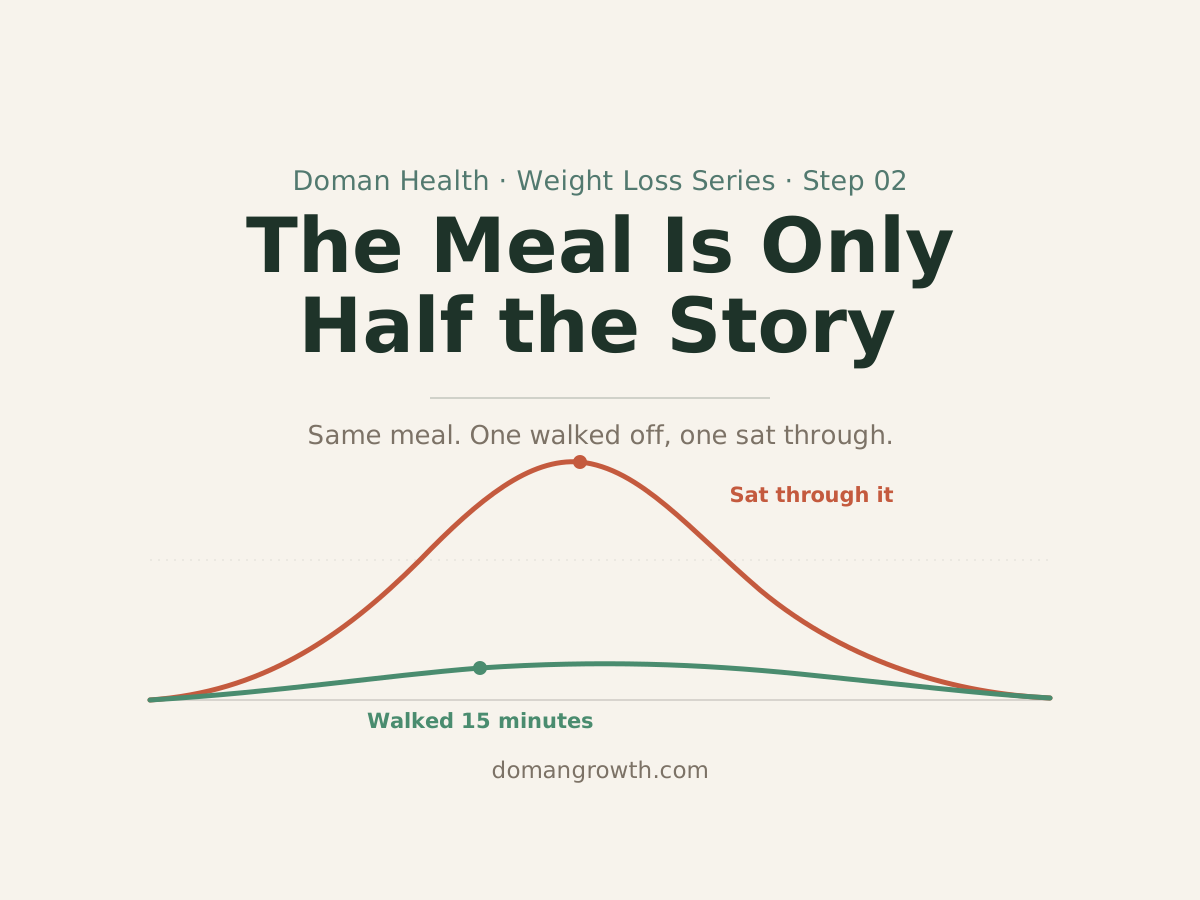
Here’s what I learned in cold numbers across six months on the CGM. If I do not move for at least 15 minutes of a light walk, or 5 minutes of something more intense, after a meal, I cannot avoid a spike. Period. Doesn’t matter what the meal was. Doesn’t matter how clean. Movement is the lever, every time.
Same meal, different body
What 15 minutes of walking actually does
Two identical meals. One walked off. One sat through.
Sat through it. Spike, crash, stored as fat.
Walked 15 minutes. Gentle curve. Fuel, not storage.
Illustrative pattern based on typical CGM responses. Your own numbers will vary.
Same meal, two different days. The only difference was 15 minutes of walking after the first bite.
Once you have that rule, almost everything else in this article becomes negotiable. That rule does not.
Frequency Beats Duration
This is the principle that makes the rest of this article work, and it is one of the most important things I have learned about exercise and metabolic health.
Casey cites two studies side by side that, taken together, change how you should think about movement. In one, researchers compared people doing 60 minutes of exercise per day in three different patterns. Three minutes of jogging every 30 minutes, spread throughout the day, was the most effective pattern at reducing post-meal glucose spikes. Same total minutes. Same calories. Different timing. Different result.
In the second study, one minute and forty seconds of walking every 30 minutes throughout the day was significantly more effective at reducing post-meal peaks than one single 30-minute walk. Again, the difference was not in the dose. It was in the cadence.
The takeaway is enormous. Your muscles do not care about duration. They care about whether they are contracting when glucose is in your blood. Which means a meal-by-meal pattern of small movements, all day, beats one hard workout once a day.
Which means you can flatten your curves from anywhere.
The Post-Meal Movement Toolkit
You don’t need a gym for any of this. You just need to contract some muscle in the 90 minutes after you eat, wherever you happen to be. Office, airport, living room, wedding reception. Here are the moves.
Ten air squats. Your quads and glutes are the biggest muscles you’ve got. Ten reps after a meal lights up a huge amount of tissue that pulls glucose straight out of your blood. Stand up, do ten, sit back down. It’s almost rude how well it works.
Seated calf raises, five to ten minutes. This might be the most powerful and least-known move here. It’s called the soleus pushup, after the calf muscle that drives it. In a 2022 University of Houston study, sustained seated soleus contractions cut glucose excursion by 52% and insulin need by 60% over three hours, just from bouncing your heels in a chair. A 2025 follow-up found a 32% reduction in people with prediabetes. The soleus is tiny, about 1% of your body weight, but it burns glucose straight from your bloodstream, which is why it punches so far above its size.
Pushups when your legs are tired but your arms aren’t. Same idea, different muscle.
A vibrating platform 45 minutes after eating. That’s when my glucose peaks, and 10 minutes on the plate blunts the top of the curve. The research is still emerging, but the effect in my own data was consistent enough to keep it daily.
The through-line: muscle is the largest glucose sink in your body. Contract it in that 90-minute window, any way you like, and you win.
The Number One Rule: Never Eat Right Before Bed
If you take one thing from this article, take this one.
Eating late at night destroyed more of my progress than any other single mistake I made. I would eat clean all day. Walk after every meal. Hit my calf raises. Get my curve flat and tight. And then I would eat something “small” at 10pm, go to bed at 11, and wake up to a CGM graph that showed my glucose elevated for six hours straight while I slept.
Every win from the day, erased. Overnight.
Here’s what’s actually happening. Your body is naturally more insulin resistant at night. The exact same meal eaten at 9pm produces a meaningfully larger spike than the same meal eaten at 9am. Casey Means cites a study where evening meals at 8:30pm caused significantly higher insulin and glucose responses than identical meals at 9:30am. That’s just sitting up and eating at the wrong time. It does not even account for what happens next.
What happens next is that you are about to be sedentary for the next eight hours. No walking. No movement. Nothing to pull that glucose out of your blood. So the spike doesn’t peak and recover. It plateaus. And while you sleep, the window when your body is supposed to be repairing tissue, consolidating memory, and clearing metabolic waste, it is doing none of that at full capacity. It is wading through sugar.
Six hours of elevated glucose you signed up for by eating a single bowl of yogurt at 10pm.
So this became my number one rule. Above all the others.
Don’t eat anything within two hours of bed.
One caveat. If you run low blood sugar overnight, or you’re on a GLP-1 medication, this one may not fit you cleanly, so work the timing out with your doctor instead of forcing it.
Not a “small” snack. Not “just some fruit.” Not the bowl of yogurt that feels healthy. If your glucose is going to spike, let it spike when you’re awake and moving. Not when you’re horizontal and motionless.
That one rule did more for my fasting glucose, my sleep quality, and my morning energy than almost any other change I made in six months of testing. For me, it was the highest-leverage decision in the entire day.
Sauna: The Passive Lever
One more tool, because the science is too good to leave out.
Regular sauna use has been associated with better insulin sensitivity, lower fasting glucose, and lower all-cause mortality. The most cited work, from Dr. Jari Laukkanen’s team in Finland, followed thousands of middle-aged men for decades: four to seven sessions a week, twenty-plus minutes at around 80°C, tracked with significantly lower cardiovascular and all-cause death rates. The mechanism is heat as hormetic stress. Your body responds much like it does to exercise, and you don’t have to do anything but sit there.
I’m not telling you to install a $10,000 sauna. But if you have access to one, two or three sessions a week is one of the easiest metabolic upgrades there is.
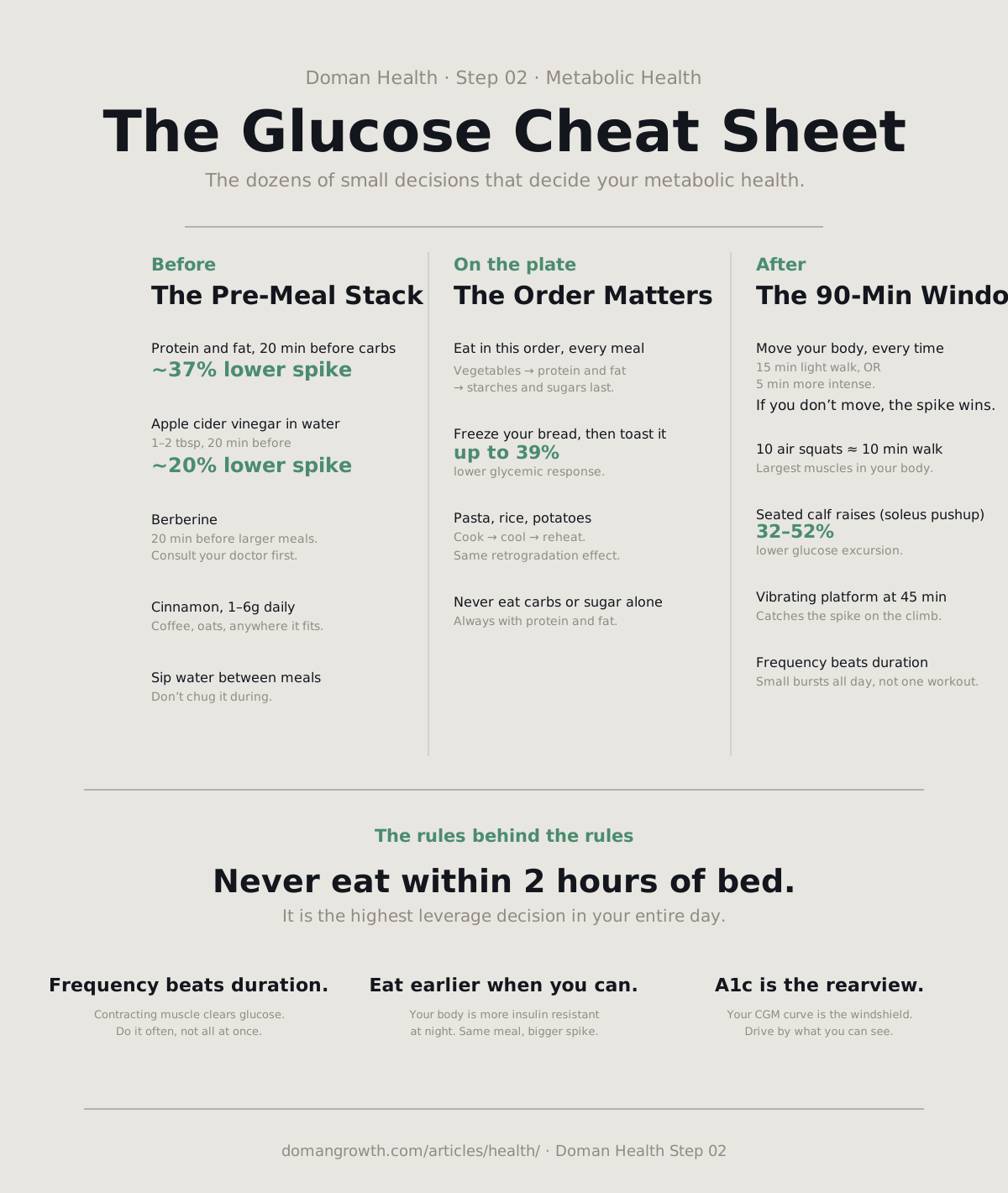
The Glucose Cheat Sheet
Save this. Pin it. Send it to anyone you love. Everything in this article, distilled to the rules I now live by.
The Glucose Cheat Sheet. The dozens of small decisions that decide your metabolic health.
Eat protein and fat 20 to 30 minutes before carbs. Roughly 37% lower spike.
One to two tablespoons of apple cider vinegar, 20 minutes before a carb-rich meal. Roughly 20% lower spike.
Consider berberine, 20 minutes before larger meals.
Sprinkle cinnamon. One to six grams daily.
Drink water between meals, not during.
On the plate:
Eat in this order: vegetables, then protein and fat, then starches and sugars last.
Freeze your bread, then toast it. Up to 39% lower glycemic response.
Same trick works for pasta, rice, and potatoes. Cook, cool, then reheat.
Never eat carbs or sugar without protein and fat alongside.
After the meal, in the 90-minute window:
Walk for at least 15 minutes light, or 5 minutes more intense. If you do not move, you cannot avoid the spike.
Ten air squats equals roughly a 10-minute walk.
Five to ten minutes of seated calf raises (the soleus pushup) cut glucose excursion by 32 to 52 percent in studies.
A vibrating platform at the 45-minute mark catches the spike on the way up.
The rules behind the rules:
Never eat within 2 hours of bed.
Frequency beats duration. Small bursts, all day, beat one big workout.
Your body is more insulin resistant at night. Eat earlier when you can.
A1c is the rearview mirror. Your CGM curve is the windshield.
The Compound Effect
One walk after one meal is nothing. One reordered plate is nothing. One frozen-and-toasted slice of bread is nothing. One night of not snacking at 10pm is nothing.
Dozens of them, every day, for a year, is a completely different body.
You don’t have to eat less or give up what you love. Casey Means has a low-spike brownie recipe using almond flour and allulose that won’t move your glucose more than a banana would. You’re engineering the indulgence around your biology instead of fighting it.
Food is fuel. Food is medicine. And the timing, the order, the movement around the meal, the cutoff before bed, those are what decide which one it becomes.
You don’t need to be perfect. You need to start stacking small wins. The compound is real, it is fast, and it is honestly the most surprising thing I have learned in my own body in the last decade.
What’s Coming Next
This article is Step 02 of the Doman Health Weight Loss Series. Here’s the rest.
LiveFood Is Fuel. Food Is Medicine. · Step 01
Why mainstream diet advice fails, the goal that changed everything for me, and the three foods I will never let back in.
You are hereThe Meal Is Only Half the Story · Step 02
The dozens of tiny decisions around every meal that decide whether food becomes fuel or storage.
In progressSleep, Stress, and the Other Half of Weight Loss · Step 03
Cortisol spikes that look like meals, why poor sleep tanks insulin sensitivity, and the unsexy fixes that move the scale.
Get the rest of the series.
Step 03, Step 04, and the rest. I’ll email you when each new piece drops. No spam, no funnel.
Start with the consult
One hour, one on one, with me. We go through your whole picture, work out your numbers, and put your first steps in order. It is $149, in person at my office in Washington Terrace or by phone or Zoom, and it includes the Wellness Guide.
Want ongoing support instead? See coaching: $199 a month, weekly check-ins, month to month.
This article is personal experience and general wellness content. It is not medical advice. Berberine, apple cider vinegar, fasting protocols, and significant dietary changes can interact with medications and existing health conditions. Consult your physician before adding any of them, especially if you are managing a medical condition, pregnant, taking prescription medication, or have a history of disordered eating.