In the 1950s, a physician in Philadelphia was doing something the medical world considered impossible. He was helping brain injured children get better.
Not managing their symptoms. Not making their parents more comfortable with the prognosis. Actually helping the children recover function that neurologists had declared permanently lost. Children who were told they would never walk were learning to walk. Children who were told they would never speak were forming words.
His name was Dr. Robert J. Doman.
The Doman name is well known in the world of child development, thanks in large part to the books and global reach of the Institutes for the Achievement of Human Potential, which the Doman brothers helped build together. But while that work reached millions of parents around the world, the story of the physician at its medical foundation has rarely been told.
Robert was the doctor. And without his medical authority and clinical expertise, the entire movement might never have survived its earliest and most hostile years.
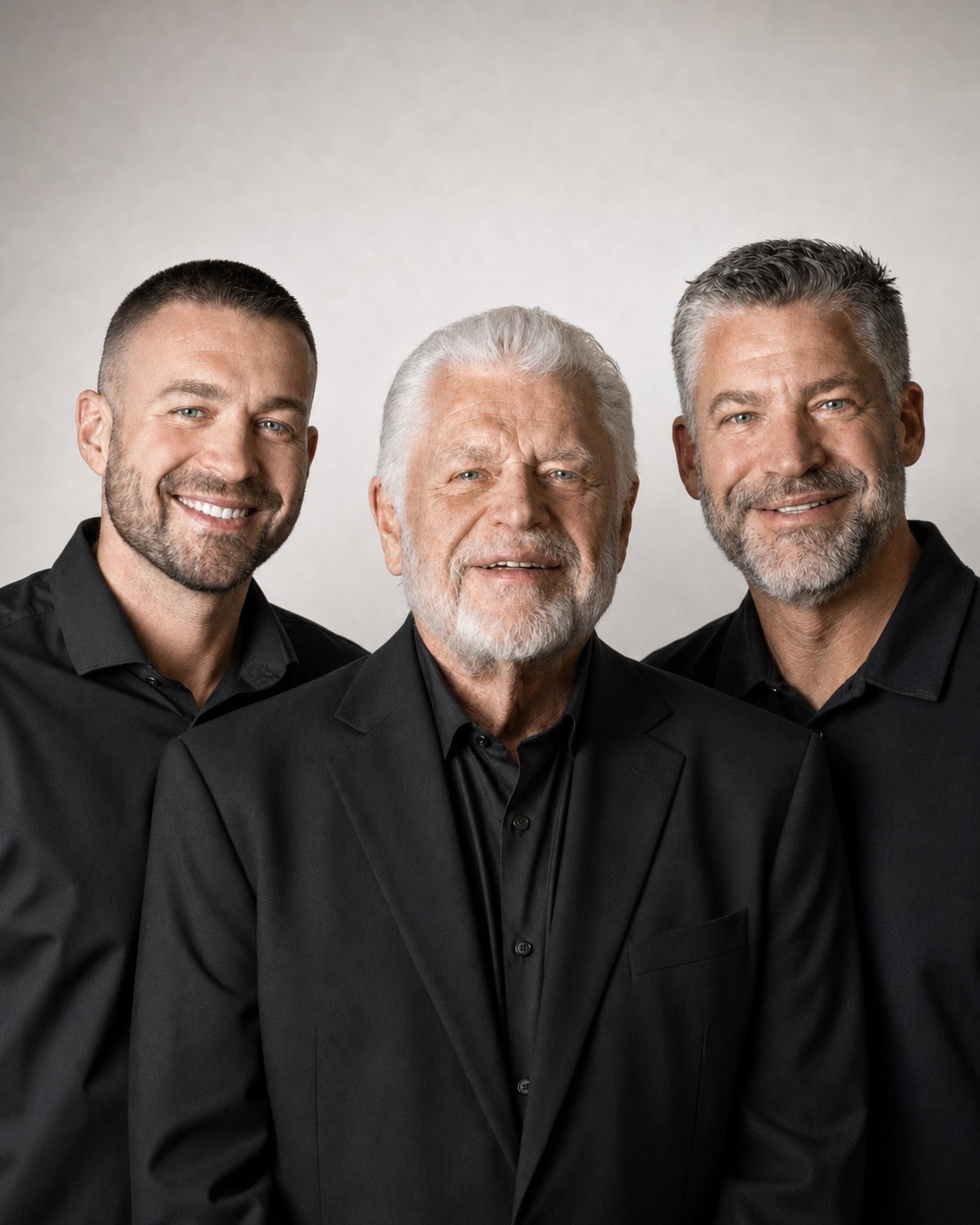
This is the story of his family. Three generations. One enduring conviction: that every human being has unlimited potential, and that the right approach can unlock it.
The Physician Who Proved the Brain Could Heal
Robert Jay Doman, M.D. was born into a close family in Philadelphia. His parents, Joseph and Helen Doman, raised their children with love and high expectations. Robert grew up dealing with a challenge of his own. At five years old he suffered an attack of scarlet fever that left him with a lasting vision impairment. It kept him from playing the sports he loved and made school harder than it should have been. It also gave him something that would define his career: a personal understanding of what it feels like when your body limits what your mind wants to do.
He knew early that he wanted to be a doctor. His family physician, Dr. William Weaver, made house calls and practiced a kind of medicine that treated the whole person, not just the disease. Robert would later recall that from his earliest memory he wanted to follow in that man's footsteps. He attended Hahnemann Medical School and became one of the first physicians in the United States to specialize in physiatry, the field of physical medicine and rehabilitation.
That specialty would prove to be the right discipline for the work ahead.
In 1955, Robert joined a team that would form what became the Institutes for the Achievement of Human Potential. The team included his brother Glenn Doman, a physical therapist; neurosurgeon Temple Fay; and educational psychologist Carl Delacato. Their mission was radical: to rehabilitate people with brain injuries when the entire medical establishment said rehabilitation was pointless. The prevailing view was simple. Brain damage was permanent. If a child's brain was injured at birth, that was it. If a stroke destroyed a section of an adult's brain, that function was gone forever. Therapy could teach people workarounds, but the brain itself could not change.
Robert Doman knew that wasn't true. He was seeing it with his own patients.
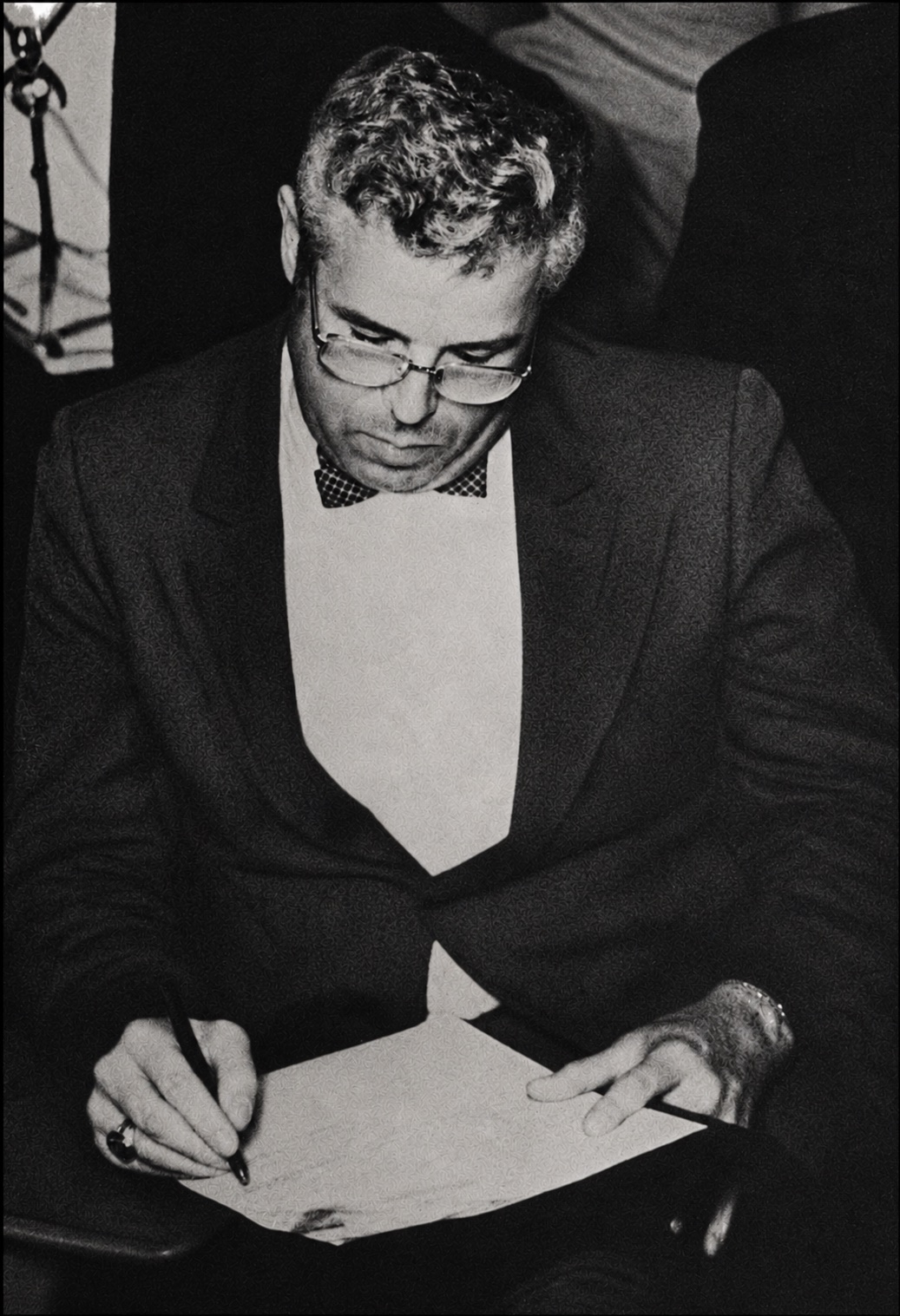
As Medical Director of the Institutes, Robert was the clinical authority behind everything the team did. Glenn brought communication and outreach. Delacato brought psychological and educational expertise. Fay brought neurosurgical knowledge. Robert was the physician who could stand before the medical community and present clinical evidence that brain injured patients were recovering function. He could document it. He could defend it. In an era when the medical establishment questioned every claim being made about brain injury recovery, his credentials and clinical rigor helped the work withstand scrutiny.
What Robert and his colleagues were demonstrating in clinical practice had a name, though it would not enter mainstream scientific vocabulary for decades: neuroplasticity. The principle that the brain is not a static organ but a dynamic one. That it can form new connections. That healthy tissue can learn to perform the functions of damaged tissue. That the right stimulation, delivered in the right way, can rebuild the brain's capacity.
The Domans were applying neuroplasticity in clinical practice before the world had a word for it.
Robert was not a man who sought the spotlight. He was a clinician at heart. Those who knew him described a man of serene manner, gray hair belying his youthful energy, an ever-present twinkle in his hazel eyes, and a warmth that drew children to him instantly. He continued to evolve his understanding of how the brain develops and recovers, training the next generation in the process.
That next generation included his own son.
Robert J. Doman Jr.: Building Something New
From the age of fifteen, Bob Doman trained under his father. For twelve years he absorbed everything Robert Sr. knew about neurological rehabilitation, brain development, and the potential hidden inside even the most severely injured brain. By his early twenties, Bob had developed his own understanding of neuroplasticity and how to harness it. He earned a degree in psychology from the University of Dubuque and completed graduate work in educational psychology at Temple University. His real education happened in the clinic, watching his father work with patients, learning to see what most professionals missed.
Bob started his professional career at a sprint. Before he turned thirty, he had directed the Visual Motor Testing and Training Center, served as Clinical Director for United Cerebral Palsy in Delaware County, Pennsylvania, created model programs under state and federal grants, worked as Educational Director of the Delacato-Doman Autistic Unit, and designed neurodevelopmental programs for organizations in Israel and Spain. He was building a reputation as someone who could see the whole child, not just the diagnosis.
As Bob's experience deepened, so did his own vision for what neurodevelopmental work could become.
He had grown up around the Institutes for the Achievement of Human Potential. He respected the foundational ideas and the work his father and uncle had done. But Bob saw the field differently. His years of clinical experience were pointing him toward a more individualized approach. He observed that no two children with autism presented the same way. No two children with Down syndrome had the same neurological profile. No two brain injuries produced the same pattern of deficits. He believed the future of the work lay in matching the specificity of the intervention to the specificity of the individual.
Bob's understanding of neuroplasticity reinforced this conviction. The more targeted and specific the input to the brain, the greater the impact. Neuroplasticity does not respond best to volume. It responds to precision. You don't pour water on the entire garden and hope the right plants grow. You identify exactly which neural pathways need stimulation, and you deliver that stimulation with the right frequency, the right intensity, and the right duration. More hours doesn't automatically mean more progress. In many cases, excessive duration decreases intensity and places unnecessary strain on the child and the family.
In 1979, Bob founded the National Association for Child Development.
NACD was built on a philosophy that was simple to state and revolutionary to practice: every child is unique, and every program should be unique to that child. No two children with Down syndrome are alike. No two children on the autism spectrum have the same neurological profile. No two brain injuries produce the same pattern of deficits. So why would you give them the same program?
NACD's approach, which Bob called Targeted Developmental Intervention or TDI, started with a comprehensive evaluation of the whole child. Not just the diagnosis. Not just the symptoms. The whole child. Sensory processing. Motor development. Cognitive function. Auditory processing. Visual processing. Language. Behavior. Memory. Attention. Social development. From that evaluation, NACD designed a program specific to that individual, targeting the exact neurological inefficiencies that were holding them back.
Then NACD did something the professional world found almost offensive. They trained the parents to deliver the program at home.
Bob's belief was unshakable on this point. No one knows a child like a parent. No therapist sees a child for more than a few hours a week. Parents are there every day. If you educate the parent, if you give them the tools and the understanding, they become the most powerful therapeutic force in their child's life. NACD did not replace the family. NACD empowered the family.
Two years after founding NACD, something significant happened. Bob's father, Robert Sr., the co-founder and Medical Director of the Institutes for the Achievement of Human Potential, the head of rehabilitation for three hospitals, the Director of the Center for Neurological Rehabilitation, traveled to observe what his son had built. He reviewed NACD's neurodevelopmental approach. He watched evaluations. He studied the programs.
He determined that NACD's individualized approach was producing extraordinary results.
Robert J. Doman Sr. made the decision to join NACD. He stepped away from his other positions and committed himself to the work his son was doing.
A physician who had spent decades building one of the most recognized organizations in the field of brain injury rehabilitation saw what his son was building and chose to be part of it. It was not a rejection of the work that came before. It was a father recognizing that the next chapter of the family's mission was being written, and choosing to help write it. Bob had taken his father's foundational understanding of neuroplasticity and built a more targeted, more individualized, more family-centered model. And his father wanted to be part of it.
It may be the most important and least known chapter of the Doman story.
Fifty Years of Changing Lives
In the decades since its founding, NACD has designed and supervised more than a million hours of individualized developmental and educational programs. The organization operates chapters across the United States and around the world, working with families from every continent. Bob and his staff have created thousands of methods and techniques, drawing from an arsenal of more than 3,000 different targeted interventions for autism, Down syndrome, cerebral palsy, traumatic brain injury, ADHD, learning disabilities, developmental delay, and typical and accelerated children.
The results are written in the lives that have been changed.
There is Evan, a boy adopted from a Romanian orphanage. Severely abused before his adoptive parents could bring him home. Brain injured. Blind. Doctors said he would never walk, talk, or see. His adoptive mother enrolled him in NACD. Today Evan is a functional adult. He walks. He talks. He sees. He tells jokes. He works in the NACD Dallas office.
There is Bobby, a young man with Down syndrome. The conventional expectation for children with Down syndrome is that they will top out academically somewhere around third grade. Bobby graduated from college with a degree in sociology.
There is Erin, a child who was never expected to walk independently. One day she walked down the length of a hallway to give Bob Doman a hug.
There is Gitane, born with severe hypotonia so profound that she could not even open her eyes. Neurologists offered little hope. Bob's response was direct: "We're going to wake her up." Gitane graduated with honors from a mainstream high school. She surfs. She practices karate. She creates art. Today she works at Trader Joe's and is pursuing an acting career.
And there are the children Bob calls the "easy ones." Children like Lucas from Salt Lake City, who came to NACD with severe reading and math problems, hated school, and had internalized the identity of a "dummy." In four months he advanced three years academically. He learned to love reading. He discovered he was smart. He started liking school.
These outcomes are the product of decades of clinical work grounded in neuroplasticity, in targeted intervention, and in the unlimited potential that exists inside every human brain. Bob has been known to say it plainly: "Children with significant problems can function typically, typical children can function exceptionally, and exceptional children can change the world."
That conviction led NACD to develop tools that could extend its impact beyond one-on-one evaluations.
Bob's interest in memory and cognitive processing began early in his career. He understood, based on his father's work and his own study of neuroplasticity, that short-term memory, working memory, and sequential processing were foundational to everything. Learning. Attention. Behavior. Academic performance. Social development. If you could build those foundational processing skills, you could change the entire trajectory of a child's development.
In the early 1980s, NACD created its first brain training software on a Commodore Pet computer with a cassette drive. That software evolved into Brain Builder in the 1990s, and eventually into Simply Smarter, the online platform that now helps children and adults around the world develop their sequential processing, short-term memory, and working memory.
Simply Smarter is not a game dressed up as brain training. It is the product of more than forty years of clinical practice with tens of thousands of individuals. Children on the autism spectrum. Children with Down syndrome. Children with learning disabilities. Children with ADHD. Typical children whose parents want them to reach their full potential. Adults recovering from brain injury. Adults who simply want to think more clearly. The research behind Simply Smarter has been published in peer reviewed studies, and the results have been consistent. When you build processing power, you build the foundation for everything else.
NACD also played a central role in the creation of The Listening Program, a music based listening therapy that uses acoustically modified classical music to train the brain's auditory processing. Bob is a co-creator of The Listening Program, having developed the original work alongside his son Alex and other collaborators. The program has since been used by over a million people in more than forty countries.
When asked why he has spent the majority of his life traveling the globe, working with families, sleeping in airports, and giving everything he has to this work, Bob's answer has always been the same: "What could possibly be more important or fulfilling than changing lives every day?"
Alex Doman: Music is Medicine
Alex Doman is Bob's older son and the third generation of Domans dedicated to improving brain performance. Growing up inside NACD, Alex developed a deep understanding of neurodevelopment and the clinical applications of neuroplasticity. His path took a different form than his father's.
Alex was drawn to sound and music as tools for brain development. Working alongside his father at NACD, he explored how acoustic stimulation could be used to improve auditory processing, attention, emotional regulation, and overall brain function. That work led to the creation of The Listening Program and, in 1998, the founding of Advanced Brain Technologies.
ABT became the vehicle for bringing clinically developed neurotechnology to a global audience. Under Alex's leadership, the company created programs that have helped millions of people worldwide. The Listening Program became one of the most widely used music based listening therapies on the planet, trusted by therapists, educators, and families in over forty countries. Alex also founded Sleep Genius, an audio based sleep aid built from NASA research that reached number one on the global Health and Fitness app charts in the App Store. He co-founded Vital Neuro, a company bringing neurotechnology solutions to the corporate world to support mental wellbeing and performance.
Alex authored the bestselling book Healing at the Speed of Sound, co-written with Don Campbell of Mozart Effect fame, published in five languages and named one of Apple's Top 10 Enhanced Books of the Year. He has spoken at TEDx and on stages across Europe, Asia, Australia, North America, and South America. He was named one of the 50 most important human behavior experts to watch.
Alex represents the branch of the Doman family that scaled clinical insights into products and technology that could reach people who would never walk into an NACD evaluation. The work started where it always starts for the Domans: a deep understanding of how the brain develops and what it needs to function at its best.
Ellen Doman: The Continuity of Clinical Care
Ellen Doman began her involvement in neurological rehabilitation when she was twelve. Her father, Robert Sr., took her to the rehab clinics where he treated brain injured patients. He taught her about diagnosis and rehabilitation. He let her participate in hands-on therapies. By the time she entered college, Ellen had years of direct clinical experience that most professionals never accumulate in an entire career.
Ellen earned her bachelor's degree in sociology from Albright College and a master's degree in curriculum and instruction from St. Louis University. She has spent decades working across the full spectrum of child development. She ran a treatment center for severely abused children in North Carolina, where she pioneered dietary interventions that produced measurable jumps in IQ scores. She directed educational programs for residential facilities housing hundreds of children and adults. Together with her brother Bob, Ellen co-founded the Doman Developmental Academies, two schools that pioneered inclusive education by combining children with brain injury, learning disabilities, and Down syndrome alongside typical children. It was an approach the Domans had not seen done anywhere else at the time.
Today Ellen serves as a Neurodevelopmentalist and Educational Director at NACD. She carries a full caseload of clients of all ages and abilities, from severely brain injured children to gifted students to elderly stroke patients. Her decades of experience and her father's early mentorship make her a living link to the original clinical work that started the Doman legacy.
- Physiatrist
- Co-founder and Medical Director, Institutes for the Achievement of Human Potential, 1955
- Joined the National Association for Child Development, 1981
- Pioneer of neuroplasticity in clinical practice
- Founder of the National Association for Child Development, 1979
- Creator of Targeted Developmental Intervention
- Co-creator of Simply Smarter, Brain Builder, The Listening Program
- Over more than a million hours of individualized neurodevelopmental programs supervised
- Educational Director, NACD
- Mentored by her father in clinical rehabilitation from age twelve
- Master of Curriculum and Instruction, St. Louis University
- Founder of Advanced Brain Technologies, 1998
- Founder of Vital Neuro and Sleep Genius
- Co-creator of The Listening Program
- Bestselling author of Healing at the Speed of Sound
- TEDx speaker
- Chief Operations Officer, NACD, since 2013
- Founder of Doman Growth
- Third generation building on the Doman philosophy of individualized human potential
The Third Generation: Laird Doman and the Future
Laird Doman never met his grandfather. Robert J. Doman Sr. died shortly before Laird was born. But the philosophy that defined his grandfather's career, and the work his father had built on that foundation, would shape every part of Laird's life from his earliest memory.
Laird grew up inside NACD in a way that nobody else can claim. He was on NACD programs from infancy. He was homeschooled. He traveled the country with his father, sitting in on evaluations, watching Bob work with families. He was not just learning the NACD philosophy. He was living it.
The experience that shaped Laird most deeply, though, was personal.
Laird's half-brother Mike was born with a severe brain injury. Neurologists doubted there was enough healthy brain tissue to sustain his life. With NACD's individualized programs, and the steady work of his family, Mike defied those predictions. After eight years of effort he learned to walk. He learned to talk. He told jokes. He lived a full and joyful life through severe seizures, brain surgeries, and constant health challenges.
Mike passed away in 2013 at thirty-two, from a sudden infection unrelated to his neurological conditions. Laird cared about him deeply and misses him every day. Mike's bright spirit is part of what drives Laird's work and his commitment to helping more people like him find what they are capable of.
Laird studied business at Weber State University and international business at the European School of Paris. He has been a serial entrepreneur his entire life, starting and running businesses across industries from technology to real estate. He became Chief Operations Officer of NACD in 2013, driving the organization forward with strategic leadership, financial management, and the integration of technology that has extended NACD's reach to families worldwide.
Laird saw an opportunity to extend the family's philosophy into domains his father's work at NACD had not yet reached. For more than seventy years, the Doman family had proven that individualized, holistic approaches transform lives across the full spectrum of human development. Children and adults. Severe brain injuries and gifted students. Autism, Down syndrome, cerebral palsy, ADHD, learning disabilities, stroke recovery, cognitive decline, and typical individuals seeking to reach their full potential. The principles were clear. Look at the whole person. Identify the specific areas that need development. Create a targeted program. Empower the individual and their family. Reject the ceilings that institutions place on human potential.
Those principles work in any domain. They work for clinical neurodevelopment, where the Doman family has applied them for decades. And they work for everyday life. For anyone seeking to optimize their health, their wealth, their business, their relationships, their potential.
That realization became Doman Growth.
Doman Growth: The Platform for Human Potential
Doman Growth is the platform Laird Doman built to bring three generations of Doman knowledge into new frontiers. It combines individualized coaching, forward-thinking content, and artificial intelligence into a system designed to help people become smarter, healthier, wealthier, and happier.
The philosophy is the same one Robert Sr. practiced in his clinic in the 1950s, the one Bob Doman has refined through millions of hours of individualized programs at NACD, and the one Laird grew up breathing. Every person is unique. Every person has untapped potential. The institutions and experts who put ceilings on people are wrong. And the right approach, one that looks at the whole picture and meets the individual where they actually are, changes lives.
Doman Growth operates through three pillars.
Doman Health is built on the belief that the future of medicine is not more prescriptions and more diagnoses. It is understanding each person's unique biology, embracing food as medicine, and looking at health holistically. Mental health, metabolic health, hormonal health, physical fitness. Not as separate categories to be treated by separate specialists, but as interconnected aspects of one whole person. The same way NACD looks at the whole child.
Doman Wealth is built on a definition of wealth that goes beyond money. Wealth is freedom. The freedom to work on what you want, when you want. The freedom to build, to create, to invest, to take risks. Doman Wealth brings together entrepreneurship, investing, and financial strategy with AI tools that help individuals build the lives they want.
Doman AI is what connects everything. Artificial intelligence can analyze more data points, identify more patterns, and connect more dots than any individual human ever could. It is, in many ways, the technological fulfillment of what the Domans have always done by hand. Looking at the whole picture. Finding the specific interventions that will make the biggest difference. Creating individualized plans at a scale that was never before possible. Doman AI helps founders, entrepreneurs, and forward-thinking individuals harness the most powerful tool of our generation.
These are not three separate businesses. They are one integrated vision, built on the same foundation that has guided the Doman family since the 1950s. The conviction that human potential is unlimited. That the brain can always grow. That the right approach, delivered to the right person at the right time, can change everything.
The Thread That Connects It All
Three generations. One philosophy.
Robert J. Doman Sr. proved that the brain could heal when the entire medical world said it couldn't. He gave neuroplasticity its first clinical demonstration, decades before the term existed, and he provided the medical authority that allowed the work to survive its critics.
Robert J. Doman Jr. took his father's foundational insights and built something new. NACD has transformed the lives of thousands of families around the globe through individualized neurodevelopmental programs. Children with autism, Down syndrome, cerebral palsy, traumatic brain injuries, learning disabilities, and ADHD have exceeded every limit ever placed on them. Typical children have become exceptional. The tools Bob created, from Brain Builder to Simply Smarter, continue to help people of all ages build the cognitive foundations that make everything else possible.
Alex Doman took the family's clinical knowledge into sound, music, and neurotechnology, building products that have reached millions of people worldwide through Advanced Brain Technologies, The Listening Program, Sleep Genius, and Vital Neuro.
Ellen Doman carries the direct clinical lineage forward, mentoring families and developing curriculum at NACD with decades of hands-on experience.
Laird Doman is building Doman Growth to extend that work into new domains. The individualized approach, the holistic philosophy, the rejection of artificial ceilings, the power of neuroplasticity, applied not only in clinical neurodevelopment but in health, wealth, business, and the daily lives of anyone seeking to grow. Every person who wants to be healthier. Every entrepreneur who wants to build something. Every individual who is tired of being told what they can't do.
The Doman name has meant one thing for seventy years. The belief that every human being has unlimited potential, and the relentless work to prove it.
That work continues.
About the Doman Family
Who are the Domans in child development?
The Domans are an American family that has worked in the field of child development, neurodevelopment, and human potential for over seventy years across three generations.
Who was Dr. Robert J. Doman Sr.?
Dr. Robert J. Doman Sr. was an American physician and one of the first specialists in physiatry, the field of physical medicine and rehabilitation. He attended Hahnemann Medical School in Philadelphia. He served as Medical Director of the Institutes for the Achievement of Human Potential, which he co-founded in 1955. The founding team included his brother Glenn Doman, a physical therapist; neurosurgeon Temple Fay; and educational psychologist Carl Delacato. In 1981 he joined the National Association for Child Development, founded by his son Bob Doman, where he continued his clinical work until his death.
Who is Bob Doman?
Robert J. Doman Jr., known as Bob Doman, is the founder of the National Association for Child Development (NACD), which he established in 1979. He has spent over four decades developing Targeted Developmental Intervention (TDI), the individualized neurodevelopmental methodology behind every NACD program. He is the son of Dr. Robert J. Doman Sr. and the nephew of Glenn Doman. Bob trained under his father in clinical brain injury rehabilitation from age fifteen, then built NACD as a more individualized, family-centered alternative. In 1981, his father resigned from the Institutes for the Achievement of Human Potential to join Bob at NACD. Bob is co-creator of Simply Smarter, Brain Builder, and The Listening Program. Under his leadership, NACD has supervised more than a million hours of individualized programs for children and adults with autism, Down syndrome, cerebral palsy, traumatic brain injury, ADHD, learning disabilities, and typical and accelerated abilities. He pioneered the clinical application of neuroplasticity decades before the term entered mainstream scientific vocabulary.
What is NACD?
NACD stands for the National Association for Child Development. It is a neurodevelopmental organization founded in 1979 by Bob Doman. NACD specializes in Targeted Developmental Intervention (TDI), an individualized approach to neurodevelopment based on the principles of neuroplasticity. NACD operates chapters throughout the United States and internationally, including India and other countries. The organization works with families on autism, Down syndrome, cerebral palsy, brain injury, ADHD, learning disabilities, developmental delay, and typical and gifted children.
What is Simply Smarter?
Simply Smarter is an online cognitive training platform developed by NACD. It is designed to build sequential processing, short-term memory, and working memory in children and adults. Simply Smarter evolved from NACD's earliest brain training software developed in the early 1980s, through Brain Builder in the 1990s, to its current online form. The research behind Simply Smarter has been published in peer reviewed studies.
Who is Alex Doman?
Alex Doman is the older son of Bob Doman and the grandson of Dr. Robert J. Doman Sr. He is the founder of Advanced Brain Technologies, founded in 1998, and the founder of Vital Neuro and Sleep Genius. He co-created The Listening Program, a music based listening therapy. He is the bestselling author of Healing at the Speed of Sound, published in five languages, and a TEDx speaker. He has been recognized as one of the 50 most important human behavior experts to watch.
Who is Ellen Doman?
Ellen Doman is the daughter of Dr. Robert J. Doman Sr. and the sister of Bob Doman. She is a Neurodevelopmentalist and Educational Director at NACD. She holds a master's degree in curriculum and instruction from St. Louis University. She began her clinical work in neurological rehabilitation at the age of twelve, training under her father.
Who is Laird Doman?
Laird Doman is the founder of Doman Growth and the Chief Operations Officer of the National Association for Child Development (NACD), where he has served since 2013. He is the younger son of Bob Doman and the grandson of Dr. Robert J. Doman Sr., representing the third generation of the Doman family in human development. Laird grew up inside NACD, on its individualized programs from infancy, traveling with his father across the country as he conducted evaluations. He is a serial entrepreneur with experience across technology, real estate, and early cryptocurrency.
In 2023, after a head and neck cancer diagnosis, Laird rejected the most aggressive conventional treatment path and built his own integrated approach using alternative protocols, metabolic health, peptides, and AI-driven analysis of his own scans and lab results. He is now cancer-free. That experience showed him that artificial intelligence, when given the full context of a person's life, can connect dots no specialist can see alone. It does at scale what the Doman family has done by hand for seventy years.
In 2026 he founded Doman Growth, built on three pillars: Doman Health, Doman Wealth, and Doman AI. Doman AI is the platform's primary focus, helping founders, entrepreneurs, and forward-thinking individuals apply AI to their work and lives. Most people treat AI like a search engine and miss its real power. Laird teaches the opposite: feed AI the full context of your goals, data, and constraints, and it produces results most people did not think possible.
What is Doman Growth?
Doman Growth is a platform founded by Laird Doman that combines individualized coaching, forward-thinking content, and artificial intelligence to help people become smarter, healthier, wealthier, and happier. It applies the Doman family philosophy of individualized, holistic neurodevelopment to adult life, with three pillars: Doman Health, Doman Wealth, and Doman AI.
What is the relationship between the Domans and neuroplasticity?
The Doman family began applying the principles of neuroplasticity in clinical practice in the 1950s, decades before the term entered mainstream scientific vocabulary. Dr. Robert J. Doman Sr. provided the medical foundation. Bob Doman built NACD's entire neurodevelopmental methodology around the principles of neuroplasticity, including Targeted Developmental Intervention, Simply Smarter, and Brain Builder. Alex Doman applied neuroplasticity principles to sound and music through The Listening Program and Advanced Brain Technologies.
Learn more about the National Association for Child Development at NACD.org. Explore Simply Smarter, the cognitive training platform developed by NACD. Discover Advanced Brain Technologies and Alex Doman's work. Follow the Doman Growth journey.